
Today I was working from home, deep in my own little universe , the kind of focus where the world fades out and time stops acting normal.
I was using ChatGPT and going back and forth with prompts, ideas, tasks… that “locked-in” mode where you think you’ve been working for 20 minutes but somehow half the day is gone.
At some point, I noticed something simple:
My wife wasn’t around.
Not like “she left the house” , just… not in the space around me.
I kept working, but then I realized I hadn’t heard her voice, her footsteps, nothing. So finally I asked:
“Where are you?”
She replied casually from the other room:
“I went to my room. I’m reading a book.”
Then she added something that made me pause:
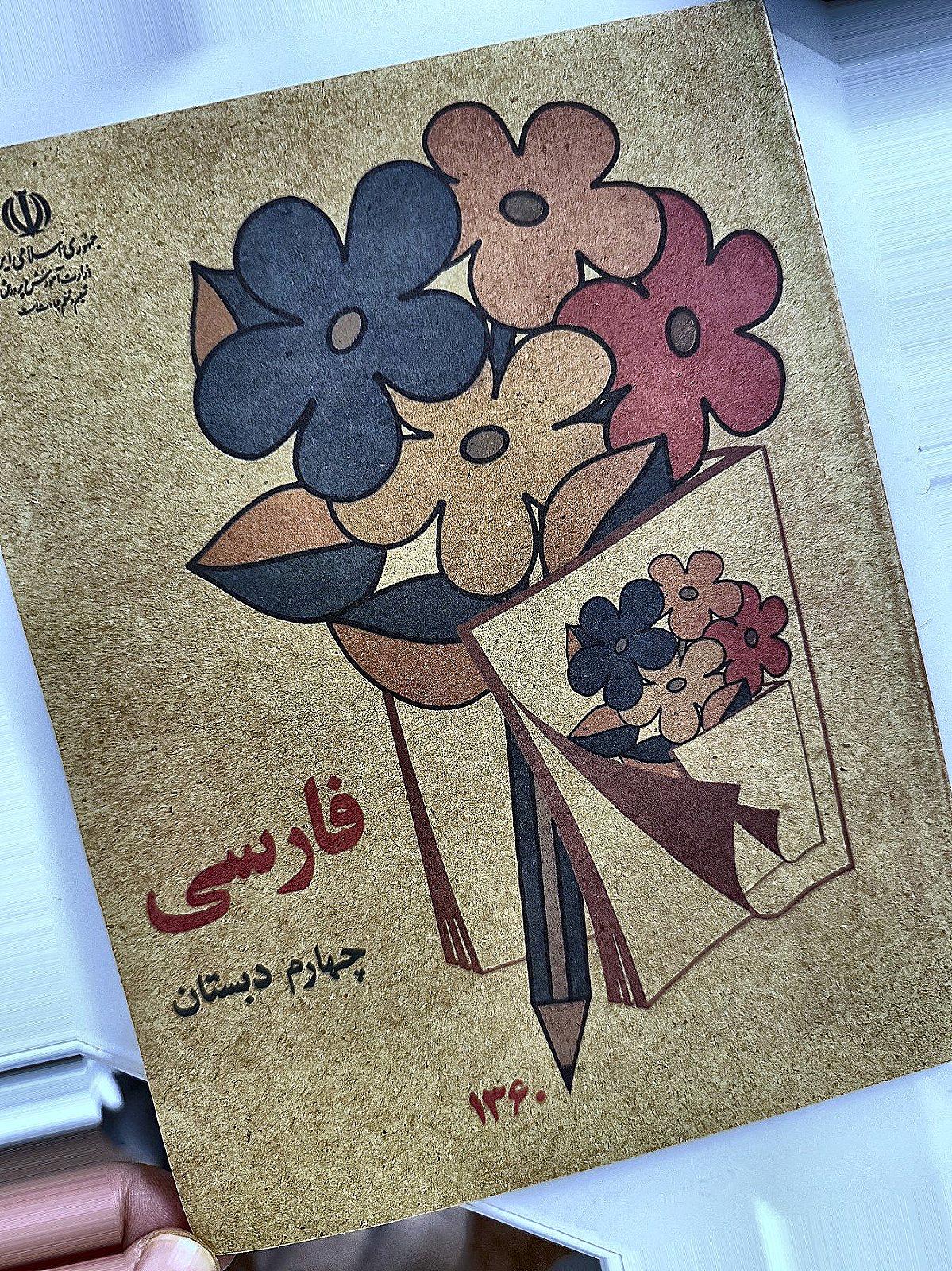
“You know something funny, Mani? I just finished the Grade 4 Farsi book. ”
I stopped typing.
Grade 4.
That book.
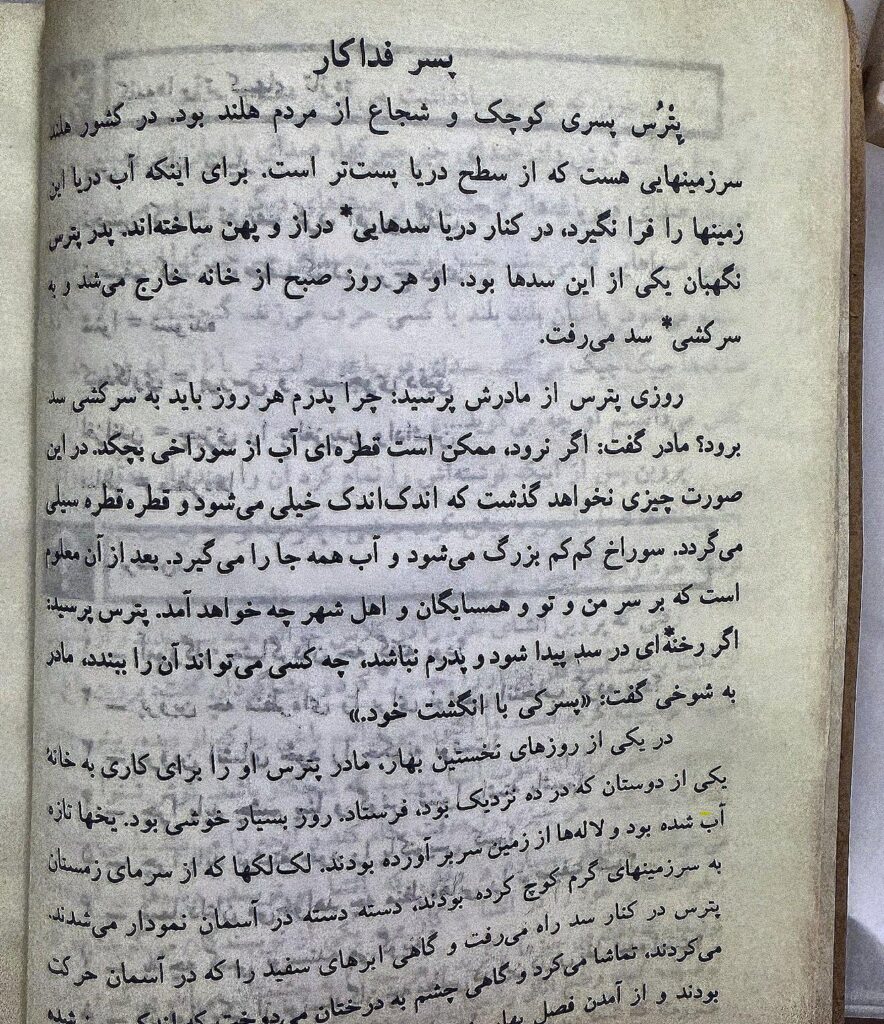
The reading book kids use in elementary school to learn how to read Farsi properly at grade 4 for the entire year. The one with those short lessons, simple stories, and exercises that feel like climbing a mountain when you’re a child. Not just reading , learning the shape of the words, training your eyes, your mind, your patience. And if you want, you use it to practice writing too, line by line, like building a new brain from scratch.
My wife loves nostalgic things like that , honestly, I do too. Nostalgia is like opening a drawer in your memory and suddenly smelling your childhood. thats why she bought that book from Persian supermarket in Toronto, just to look at it and remember her childhood, great memories.
But then she said the part that hit me:
“I finished the entire book in like… 15 minutes.”
Fifteen minutes!
That’s when the real story started.
Because that same book once took us a full year.
A whole year… to finish what now takes ten or fifteen minutes.
One year to ten minutes.
That’s not just improvement.
That’s a time machine.
And it made me realize something we forget all the time:
The first time is always expensive
Not expensive in money.
Expensive in time.
In confusion.
In frustration.
In feeling stupid.
In asking a hundred questions.
In not knowing what you don’t know.
When you’re a child learning to read, every sentence is heavy. You don’t just read the story , you fight every word. You decode it. You sound it out. You hesitate. You get it wrong. You try again.
And adults forget that they used to be that version of themselves.
We forget how long it takes to become someone who can do things quickly.
Now imagine this isn’t about a Farsi book.
Imagine it’s about life.
What else in your life went from “one year” to “ten minutes”?
Let’s play with that thought.
1) Money
At 16 or 18, making $10,000 can feel like climbing a cliff with your bare hands.
It might take a whole year of work.
Late shifts.
Saving every dollar.
Saying no to everything.
But at 40?
you might make $10,000 in one day.
Not because you are “luckier.”
Because you now have what your younger self didn’t: skills, leverage, and experience.
- skills
- relationships
- leverage
- confidence
- knowledge (of how money moves)
Your younger self trades time for money.
Your older self trades value for money.
And value is something you build slowly… until one day it looks fast.
2) Confidence
The first time you speak in public, it can feel like standing naked in front of a stadium.
Your heart pounds.
Your mouth dries.
Your brain goes blank.
But after you’ve done it 50 times?
You walk up, breathe, smile, and talk like it’s nothing.
People think: “Wow, you’re a natural.”
They didn’t see your first version.
They didn’t see your Grade 4 book phase.
3) Love and marriage
The first time you try to love someone properly, you’re learning a language with no dictionary.
You don’t know how to listen.
You don’t know how to communicate.
You don’t know which fights matter and which ones are just ego wearing a mask.
But after years?
You can read a mood in silence.
You can fix a problem with one sentence.
You can give comfort without words.
At the beginning, love is loud and confusing.
Later, love becomes quiet and intelligent, and just then you can enjoy it, because you understand it better.
4) Building something (a business, a career, a dream)
The first time you build anything real, it feels like you’re dragging a car with a rope.
Everything is hard.
Everything is slow.
Everything breaks.
But then… later in life…
You build faster.
Not because life got easier.
Because you got stronger.
You’ve seen patterns before.
You’ve made the mistakes already.
You’ve paid the price already.
Your speed is not random.
It’s proof of past pain.
5) Even suffering changes speed
This one surprised me when I thought about it:
The first time your heart breaks, it can take years to recover.
The second time?
You still hurt… but you heal faster.
Not because you don’t care.
But because you’ve learned:
- how to survive sadness
- how to rebuild yourself
- how to keep going
Even pain has a learning curve.
The most dangerous mistake we make
Here’s the trap:
We judge ourselves in Year One… against someone else’s Year Ten.
We look at people who are fast now and assume they were always fast.
We forget that speed is usually the result of repetition.
That Grade 4 Farsi book didn’t become easy because it changed.
It became easy because we changed.
That’s the twist.
The book stayed the same.
The reader evolved.
When you’re a child, you can’t even imagine that one day you’ll read that same book in ten minutes. Back then, it feels impossible. Every page feels heavy. Every sentence feels like work.
But that’s the point.
At 10 years old, you have no idea what you’ll be capable of at 20… 30… 40.
You can’t see the future version of you—the one who moves faster, thinks clearer, earns more, handles pressure better, and solves problems that would’ve crushed you before.
So if something feels slow right now, don’t let it convince you that you’re “not good at it.”
It might just mean you’re still in the early chapters.
If you stay focused and keep improving, consistently, patiently, without quitting, the results don’t grow a little.
They grow insanely.
Unbelievably.
One day you’ll look back and realize the world didn’t change…
you did.
And then it hit me , even ChatGPT fits this story
Because today I was in deep focus, using ChatGPT as my work partner, my assistant, my brainstorming tool.
And it reminded me:
Technology is also a “ten-minute shortcut”… but only if you already did your “one-year learning.”
The person who knows what to ask gets magic.
The person who doesn’t still gets noise.
Even prompting is like reading:
At first you struggle to get what you want.
But later?
You know exactly how to ask.
And suddenly you’re doing in minutes what used to take hours.
A weird question that might change your life
After my wife told me she finished that book in 15 minutes, I kept thinking:
What am I doing right now… that feels like “one year”?
What feels slow, heavy, hard, frustrating?
Because maybe it’s not slow forever.
Maybe it’s only slow because I’m still in the Grade 4 phase of it.
Maybe it’s supposed to take time right now.
Maybe the struggle is not a sign to quit.
Maybe it’s the tuition fee for speed later.
The final thought
My wife finishing a Grade 4 Farsi book in 15 minutes sounds funny.
But it’s also a mirror.
It reminds us that:
- time shrinks when you grow
- hard becomes normal
- confusion becomes clarity
- effort becomes instinct
- slow becomes fast
So if something in your life feels like it’s taking forever…
Don’t panic.
You might just be reading the book for the first time.
And one day, sooner than you think, you’ll flip through it and laugh:
“Wow… this used to take me a whole year!”