There are tragedies that arrive with a name.
And then there are tragedies that arrive with a number.
11780.
No photo album.
No ID card.
No mother holding a folded jacket and begging a clerk, “Please… check again.”
No father pressing his forehead against a cold wall, bargaining with God for one more chance to say goodbye.
No sibling screaming at the gates of a morgue because the world refuses to confirm what the heart already knows.
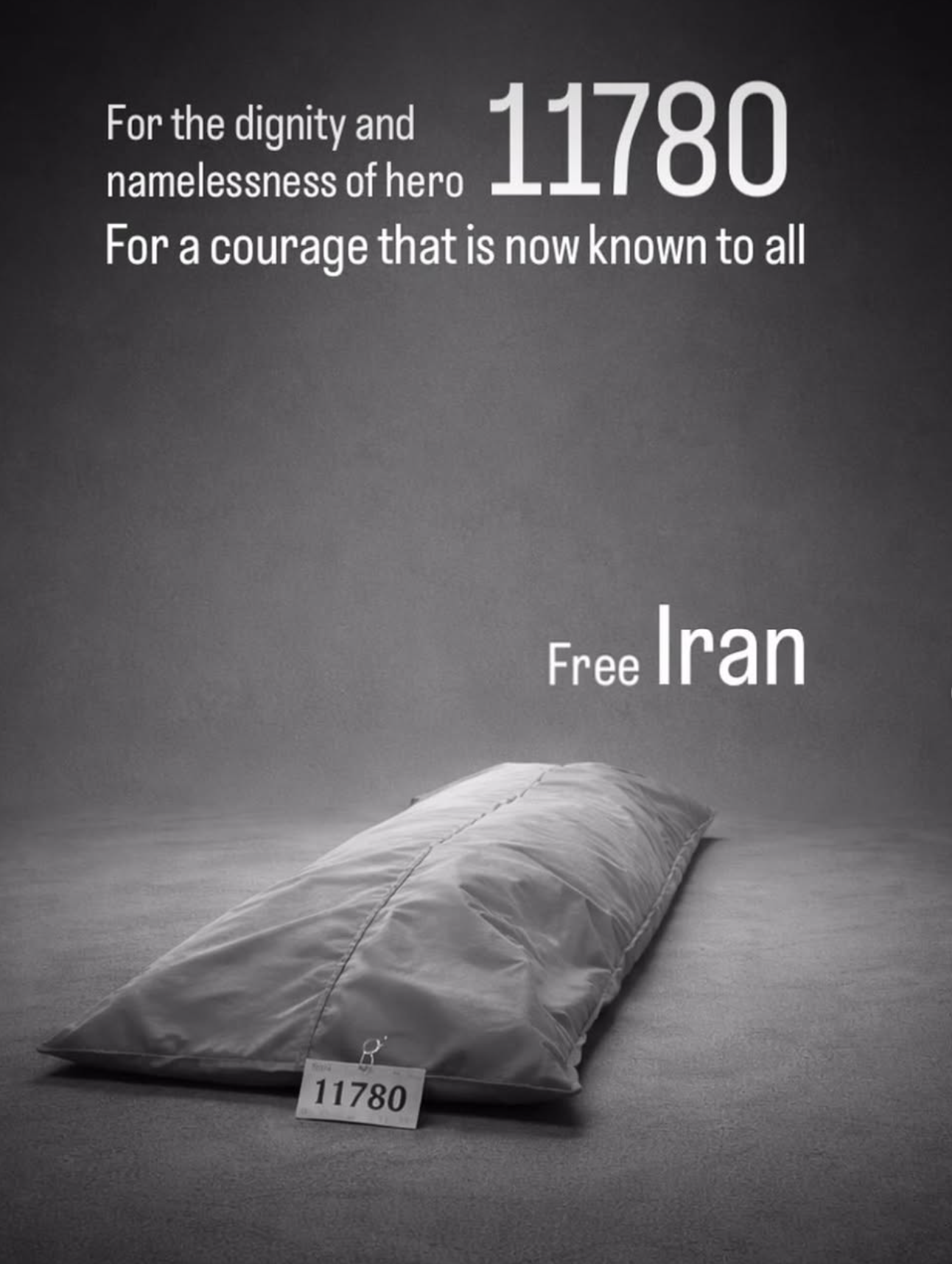
Just a number — 11780 — written on a cover, a tag, a body bag, a sheet.
And in a country where truth is treated like contraband,
a number becomes a tombstone.
January 2026: When Kahrizak Overflowed
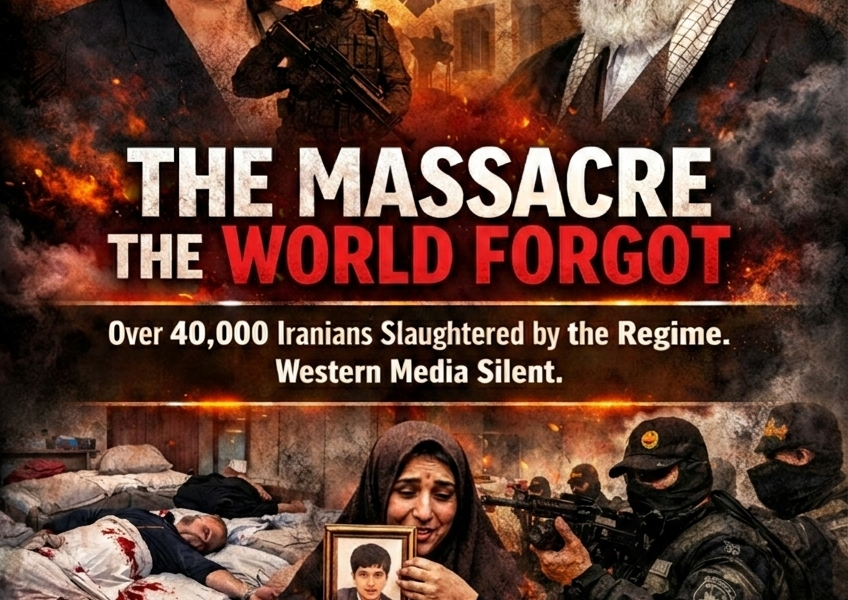
In January 2026, verified footage and eyewitness accounts showed families gathering at the Legal Medicine Organization facility in Kahrizak, south of Tehran. They came searching for loved ones among rows of body bags, after morgues could no longer contain the dead.
People stood in silence.
People collapsed.
People screamed names that echoed back unanswered.
Amnesty International reported that its analysis of the available evidence identified at least 205 distinct body bags at a makeshift site.
Human Rights Watch verified videos from the same location and counted at least 400 bodies visible across several recordings — an undercount, because bodies were piled, overlapping, partially obscured.
This is what grief looks like when a state tries to turn people into statistics.
And this is where Unknown 11780 begins.
The Kahrizak System: When a Human Becomes “Unknown”
In places like Kahrizak, identification becomes a brutal lottery.
A face is the difference between being mourned and being erased.
BBC Verify–reported materials, summarized in Persian-language reporting, describe how photographs were taken so families could identify victims. Many of those victims were severely injured, disfigured, or unrecognizable. Some were labeled “unknown” (ناشناس) — meaning their identity was not known at the time the images were taken.
Pause on that word.
Unknown.
It does not mean mysterious.
It means unprotected.
It means there is no powerful last name to trigger fear in an official’s eyes.
No network.
No cousin in the right office.
No family connection strong enough to force accountability.
“Unknown” is what happens when the system decides a person is safe to disappear.
Why 11780 Feels Real — Even When the Regime Tries to Blur Everything
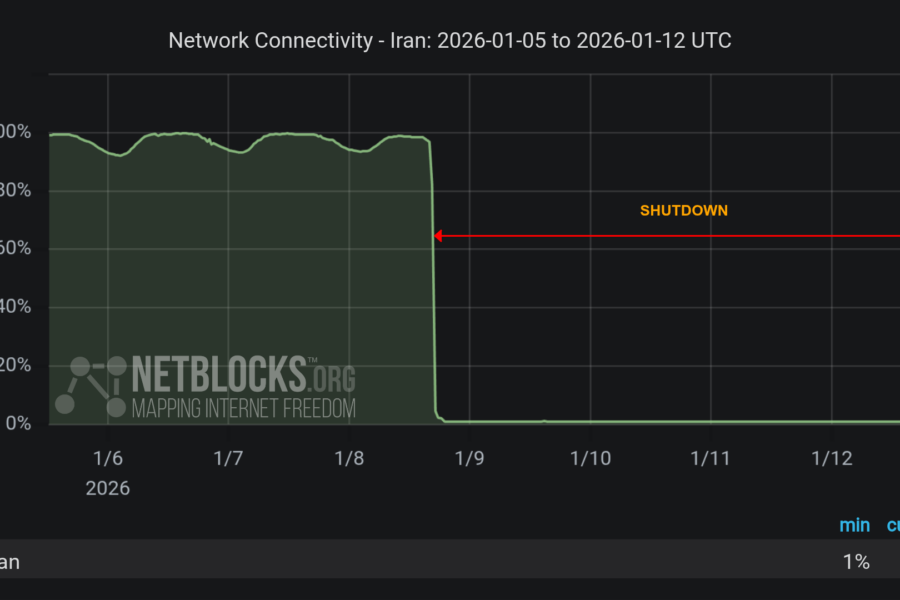
Iran’s nationwide crackdown and near-total internet blackout made independent verification almost impossible. Amnesty International explicitly noted that information was deliberately prevented from leaving the country, making the true scale of the killings extremely difficult to confirm. Human Rights Watch described similar restrictions designed to conceal the magnitude of the violence.
But one thing appears coldly consistent in the footage that survived the blackout:
Serial numbers.
Investigative analysis based on Iranian state television footage explained how bodies were assigned serial numbers that increase sequentially as each new body is registered. During the crackdown, these numbers moved far beyond normal daily patterns.
Numbers such as 11607 appeared before the surge.
11773 appeared during it.
Later footage showed even higher numbers — 12166, 12554, and beyond.
So when people whisper 11780 IRAN, it is not random.
In the grim arithmetic of a bureaucratic death machine, 11780 fits perfectly into that devastating sequence.
This does not prove every detail of the personal story attached to the number.
But it proves the system that produced it is real.
The Story People Tell: “Only One Was Left — 11780”
Here is the part that cuts deepest.
Activists and ordinary people — inside Iran and in exile — have shared a story passed quietly from phone to phone, from one exhausted heart to another.
After days of families arriving, crying, collapsing, identifying bodies…
There was one that remained.
One cover.
One tag.
One number.
11780.
11780 unknown.
Unknown 11780.
No one arrived.
No one signed the papers.
No one said, “That’s my child.”
No one said, “That’s my sister.”
No one said, “That’s my friend.”
Just silence.
And if you have ever lived under a regime that rules through fear, you know what silence often means:
People were terrified to claim the dead.
Or they couldn’t.
Or they were already gone too.
Human rights reporting has documented families desperately searching morgues and hospitals while authorities restricted movement, information, and access. This is not a movie scene. This is a documented atmosphere — panic, disappearance, grief processed through bureaucracy.
So let’s be honest about what it means for a body to remain unclaimed.
It means a person can be killed twice.
Once by bullets, batons, or boots.
Then again by erasure.
A claimed body becomes a funeral.
A funeral becomes a gathering.
A gathering becomes a chant.
A chant becomes a movement.
That is why dictators fear funerals.
So a regime terrified of its own people will always try to control the dead.
Who Was 11780?
We don’t know.
That is the wound.
11780 could have been a student whose backpack still smelled like books and cheap cologne.
11780 could have been a worker whose hands carried the exhaustion of a thousand mornings.
11780 could have been a young woman whose hair showed the last argument she ever had with authority.
11780 could have been someone who had already lost everyone — no parents left alive, no sibling close enough, no friend brave enough to step forward.
What we do know is this:
The protests and the crackdown produced overwhelming evidence of mass unlawful killings, and major human rights organizations documented patterns consistent with widespread lethal force.
And we know that in Kahrizak, bodies were laid out for identification because there were too many dead to hide at once.
So 11780 becomes more than a number.
It becomes a symbol of every person the regime wants the world to forget.
“They Had a Bigger Purpose”
People often ask:
Why would someone with no family, no future, no children… still go out into the streets?
Because freedom movements are not built by people who are safe.
They are built by people who decide that a life without dignity is not a life worth saving.
Human Rights Watch described protests spreading nationwide after January 8, 2026, followed by a coordinated escalation and large-scale killings.
Investigations reported gunshot wounds, military-grade weapons, and deliberate efforts to conceal deaths.
Journalists documented testimony from medical professionals and morgue workers describing bodies moved, records altered, and deaths hidden.
In such a world, Unknown 11780 did not need a family tree to be brave.
They only needed a line they refused to cross.
Maybe their line was simple:
“I will not accept a country where people are slaughtered and then filed away as ‘unknown.’”
The Numbers Are Disputed — The Horror Is Not
Because of the blackout and restricted access, death-toll estimates vary widely.
Some officials have inadvertently acknowledged the killing of thousands.
The UN Special Rapporteur, cited by Amnesty International, indicated at least 5,000, possibly up to 20,000, based on medical sources.
ABC News cited activist groups estimating over 5,700 killed, with tens of thousands more cases under review.
Investigative journalism described estimates that could exceed 30,000, based on testimony from morgue and graveyard workers.
Iran-focused outlets have claimed figures as high as 36,500, while acknowledging independent verification is nearly impossible under current conditions.
So if you see one exact number stated with total certainty — be cautious.
But do not let uncertainty become an excuse for indifference.
Even the most conservative figures, combined with verified morgue footage and human rights documentation, describe something monstrous.
Why “11780 Unknown” Hits Harder Than a Name
A name can be argued over.
A biography can be attacked.
A rumor can be smeared.
But a serial number does not debate you.
It just sits there — silent proof that someone existed, and someone decided they did not matter.
That is why people keep repeating it:
11780
unknown 11780
11780 unknown
11780 IRAN
Not because they love a number.
But because they are refusing the regime’s final victory:
Forgetting.
If You’re Furious, Do Something That Lets Truth Survive
If this story makes you angry, that anger is justified.
But rage with nowhere to go is what tyrants rely on.
Instead:
- Document carefully — dates, locations, screenshots, sources.
- Preserve evidence.
- Support credible human-rights documentation efforts.
- Amplify verified reporting, not only viral claims.
- If you have information about a missing person, share it through trusted, secure channels that protect identities.
Because the opposite of dictatorship is not just protest.
It is memory.
And 11780 — the unknown — deserves to be remembered.
FAQ: What Does 11780 Mean in Iran?
What does “11780” refer to?
Online accounts state that 11780 was a body-bag serial number at the Kahrizak Legal Medicine / forensic complex in Iran. According to these claims, the body associated with this number was never identified or claimed and was therefore recorded as “unknown.”
However, there is no publicly verifiable official document that confirms the existence of this exact serial number. What is confirmed is that:
- Kahrizak used serial numbers for bodies
- Many victims were officially recorded as “unknown” (ناشناس)
- Hundreds of bodies remained unclaimed or unidentified
So while 11780 itself cannot be independently verified, the broader context is real and documented.
Why do people say “11780 unknown”?
Because during mass casualty events, identities were often missing—no ID, no phone, no family immediately able to claim the body.
As a result, victims were logged administratively as numbers first, identity later (or never).
“11780 unknown” has become a symbolic reference to this process:
a number standing in for a human life that was never officially named.
Was the person male or female?
There is no official confirmation of the gender tied to serial number 11780.
That said, circumstantial evidence suggests the individual was likely male, based on:
- Footage showing only male bodies in the relevant processing area
- Standard Iranian forensic procedures, where female bodies are handled separately and require additional examinations
This remains an inference, not a verified fact.
What is Kahrizak?
Kahrizak is an area south of Tehran that hosts major state facilities.
In this context, it refers to the Kahrizak Legal Medicine Organization complex, where:
Many victims remained unidentified and unclaimed
Large numbers of bodies were processed
Families searched among body bags for missing relatives
Why focusing on the number “11780” misses the point?
The importance of this story is not the number 11780.
Even if the number were different , or even if 11780 were proven incorrect , it would not change the reality of what happened.
What matters is this:
- The Iranian regime killed large numbers of its own people
- Bodies were processed en masse, numbered, and logged administratively
- Many victims were left unidentified, unclaimed, and officially labeled “unknown”
- Families were forced to search through rows of body bags to find loved ones
- Some never did
The use of numbers instead of names reflects systematic dehumanization, not a clerical mistake.
Focusing narrowly on whether one specific serial number can be proven risks missing the larger, documented truth:
the scale of violence, the erasure of identity, and the denial of dignity to the dead and the living.
The moral and historical issue is not whether the number was 11780.
The issue is what the state did to its people , and how many were reduced to numbers, silence, and “unknown” in official records.
In that sense, 11780 functions as a symbol, not a claim that needs to stand alone.
Changing the number does not change the crime.